

Driven by Light
Commercial car photography is one of those genres most people rarely think about. It isn’t as visible as landscape, sports, or wedding photography, yet it surrounds us every day. From a billboard on the street showing the latest car model from a motoring brand to the meticulously lit shot of a V8 promoting a new oil brand, this kind of work quietly drives the visual language of the automotive world.
So, what does it take to build a career in commercial car photography?
What’s the best way to learn about lighting?
And what did my journey into it look like when I started out?
Based in England, Commercial Photographer Tim Wallace is the driving force and creative thinking behind the company AmbientLife that he launched in 2007.
Since the first moment that he got his first 'proper' camera at 7 years old, he has been totally in love with photography. Within a month he started to learn how to develop his own films while sitting in his bedroom wardrobe at night, to ensure no light leaks of course, and from there he has spent a lifetime exploring the medium.
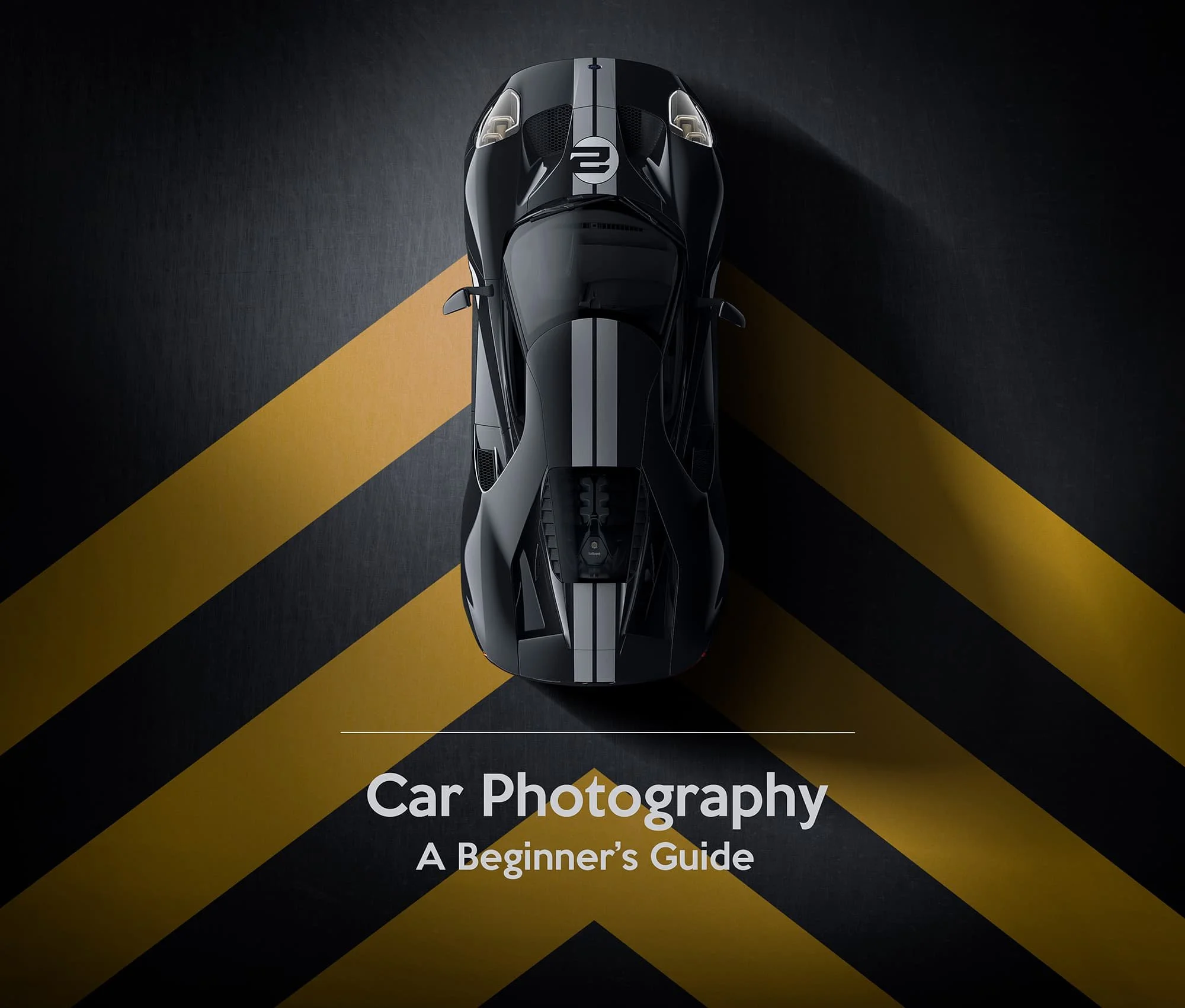
Shooting for agencies and brands globally he has carved a strong reputation in vehicle photography shooting campaigns and editorial work both in studio and on location. His work is sometimes dramatic and he always pushes to be ever more creative through his use of light to enhance the beauty of reality. His work is well known within his industry, as is his ability to make a 'really decent' cup of tea on those long studio days...
The Early Days: Falling Off the Bike
There’s no shortcut or lucky break that suddenly changes everything. No single job that “makes” your career.
It’s a gradual build, a learning process, a slow burn that takes time, patience, and persistence. Aside from everything photography related there is of course also the business side of things because you are dealing with clients, the aspect of learning how to quoting for a commission and working with that client through the planning process.
When I first started preparing to launch my business 20 years ago, I didn’t even know how to use Photoshop. I opened it up, stared at the screen, and thought, “I don’t even know how to open a file.” So I taught myself. Slowly, in my own way, by actually using it and finding an understanding of how I could use it to do what I needed it to do, not by just reading about it or watching other people on videos. The thing about PS is that there are normally about 3 different ways to do anything, neither of them are wrong, just different and with different outcomes.
Those first few years were pure learning. Every job was an opportunity to understand something new: how to light in different conditions, how to quote properly, how to speak with clients, and how to get work through the door. It was all trial and error, a little like learning to ride a bike. You can read every book on how it’s made, designed, and balanced, but when you finally get on it, you’ll still fall off. The key is getting back on, again and again, until it feels second nature and natural to you.
Finding Work and Building Trust
One of the most common questions I get asked is, “How do you find clients?”
The first step is always clarity: know what you want to shoot. Once you understand that you can start identifying your market and potential clients.You will make mistakes, and you should. You’ll ask the wrong questions, underquote, overpromise, or misread a brief. But every mistake teaches you something you’ll need later. When you start out, be honest. Don’t pretend to be a seasoned professional if you’re not. Clients and peers will see through it instantly. People are far more willing to help if they see genuine effort, humility, and potential in you.
What matters most early on is that you’re moving in a clear direction. Many photographers bounce between genres, worried they’ve chosen the wrong path.
The truth is, they just haven’t gone deep enough yet. Building trust and visibility in any niche takes time and exposure.
Advice for Building a Career
1. Specialise — and Choose Wisely
Find something you love and are passionate about but also look for a viable market.
Ask yourself: Can I bring something unique to this space?
Understand where you fit within that market. You might work with small local dealers at first, then move up to national campaigns. Each level demands a slightly different approach, tone, and pricing strategy.
If you don’t believe you could become one of the best in your field within 10 years, maybe you don’t want it enough.
It’s a tough truth, but with hard work comes real reward.
2. Understand the Business
“Your professionalism is your brand.
Your personality is your business card.
How you make your clients feel is your trademark.”
Photography is as much about business as it is about art. Be disciplined. Be consistent. And be prepared for long hours and hard work.
Clients don’t pay thousands of pounds a day because it’s easy, they pay it because it’s difficult, and they need someone they can trust to deliver under pressure.
Believe in yourself, even when it’s difficult. If you don’t, no one else will.
3. Plan to Succeed, Prepare to Fail
Think big but stay grounded.
Be honest about your strengths and weaknesses.
This industry rewards resilience and clarity. Know where you excel, and where you still need to grow.
Building a Portfolio That Works
“There are two people in every photograph, you, and the person looking at it.”
That quote has stayed with me throughout my career. Your portfolio isn’t just a collection of images; it’s a reflection of how you see the world and how you want others to see it too.
A strong car photography portfolio isn’t about having the most dramatic images or the flashiest edits. It’s about showing that you understand what your clients need, you understand their brand, and that you can deliver consistently, professionally, and creatively within that framework.
Because here’s the truth: a great body of work means nothing if the right people never see it. Our business isn’t just about taking pictures; it’s about creating opportunities, getting your work in front of those who commission commercial photographers, whether they’re agencies, marketing teams, or brand managers.
To do that, you need the right mindset. It’s not just about your images, it’s about business. When you’re working in commercial automotive photography, your images aren’t personal trophies, they’re business assets to a client. Every frame you create should help your client tell their story, sell their product, and strengthen their brand.
When you’re building your portfolio, keep that in mind. It should demonstrate:
Your individual style and voice as a photographer
The quality and precision of your work
Consistency across different environments and lighting situations
Your ability to handle a range of subjects, from full body static shots to motion and detailed product items.
And most importantly, your control of light, how you use it and what you demonstrate through your work.
Your photography is not about you, it’s about what you can create for them. Think of yourself as a problem-solver. A client comes to you with a challenge “we need to show this car, this part, this lifestyle in a way that excites people”, and your job is to translate that into imagery that works commercially for them and their brand.
Imagine hiring an architect to design your house, and they ignore your brief because they “just felt like doing it differently.” You’d never hire them again. The same applies here.
Ask yourself: what do my clients actually want? What do they need?
Can you become a valuable, trusted part of their process or are you a risk they can’t afford to take?
My biggest achievement with any client is when they trust me and they view what I produce for them as being a valued asset to their business and not a cost.
That’s the mindset that separates someone who takes pictures of cars from someone who builds a career in professional car photography.
It’s all in the Lighting
If there’s one thing that defines good photography, it’s light. Mastering it takes time, patience, and an open mind.
Once you’ve learned to use your camera instinctively, the next step is to make lighting second nature. Your goal is to reach a point where you’re not thinking about the technical side, you’re just seeing light and understanding how it behaves, and that takes a lifetime of practice. You don’t need a studio full of equipment to start. Begin with one light, the best one there is: the sun. Learn how natural light interacts with surfaces, angles, and reflections. Watch how it changes through the day. Shoot into it, across it, and against it. Experiment with things people say you “shouldn’t” do, and find out why. Sometimes you’ll discover that those “rules” just didn’t work for them.
From there, start building slowly. One light, then two. Learn what each piece of equipment adds to your control and invest as your needs grow, not because of trends or gear envy.
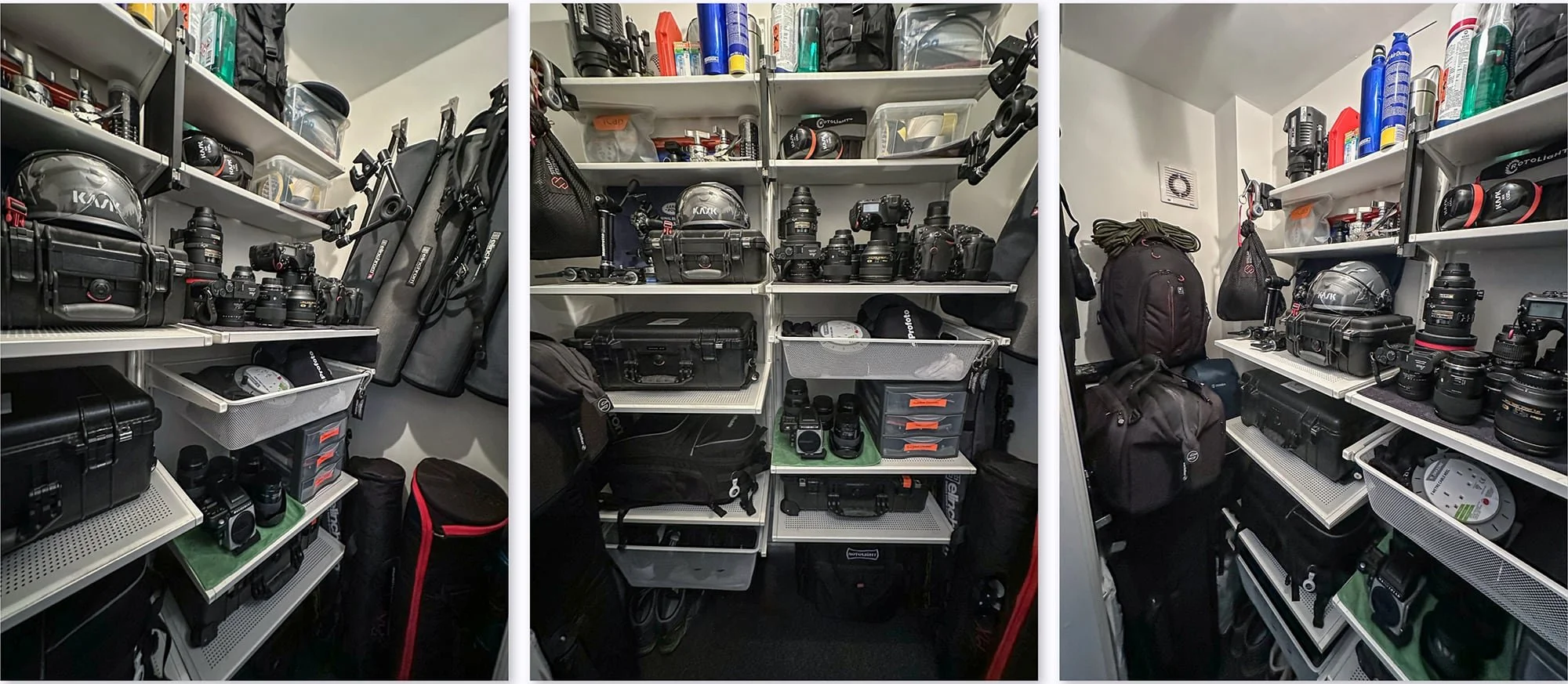
My studio equipment room grew over years, not months, and every item earned its place through necessity, not novelty.
Lighting can’t be learned from online tutorials alone. It’s a skill built from repetition, practice and curiosity. Once you truly understand light, you can shoot almost anything, cars, engines, watches, people, in any conditions. And that’s essential in commercial photography, because not every subject will be glamorous. You’ll be asked to make very ordinary things look exceptional. That’s part of the craft.
Over the years, I’ve photographed everything from supercars and luxury jets to industrial machinery and garden equipment. Each project is different, but the principle remains the same, it’s your job to make the subject look its absolute best, to help your client succeed in their marketplace. Check out our dedicated ‘Behind The Scenes’ gallery.
Don’t be afraid of the BIG stuff
As creatives we are sometimes our own worst enemies, we’ve all been there, we shoot something, look at it and think that’s great, 2 minutes later we start to think it maybe could have been better, and then we begin finding all the faults with it and end up hating it. By our nature it is what we all do, although many would not admit it. I know that I do and in many was I think it’s a healthy thing to do, as long as you can maintain perspective and not forget how far you have come up to that point.
One piece of advice that I always give young photographers is to take what you feel is your best image each month and print that off. On the reverse put the date and year. Keep doing that and after a year sit back with a strong drink and go back over them, you’ll be surprised at the result as you will start to see all the faults in the early ones that you never even noticed first time around, but also you will start to see how far you have come. I still do this, the only thing for me is that after 20 years in this game I need the whole bottle when looking back at some of the work I did back in the beginning, “oh my, I can’t believe I didn’t spot that and sent it through.”
For me the two client shoots that stick in my head the most are when I shot my first commission for Peugeot at their headquarters in Paris, and the first brochure shoot that I ever did for McLaren. I got the Peugeot shoot over 10 years ago now, and because it was a prototype vehicle they could not send me any details, I had to get a plane, go to France and meet them face to face, and of course see the car I would shoot for the first time. I went to the airport, and I was bricking it completely, total imposter syndrome kicked in and I started to think to myself that there was no way that I could do this to the level they would need. I got that flight and told myself that I just needed to believe in myself and get on with it.
The meeting went well, the client was very kind to me as I was very open about my feelings and fears, and they indeed had more confidence in me I think than I did. One month later I returned and took the car in studio for 4 days shooting, total success, client loved it.
I came out of it alive and was pretty pleased with myself that I had not mucked it up. The biggest thing I learned from that was that if I always stayed in my comfort zone and played it safe, I would never really progress and develop properly.
My second big learning curve was McLaren. They came to me and asked me to quote for a brochure shoot that would be based around the 570s but would also include all accessories and also MSO (McLaren Special Operations) upgrades. It was a mammoth shoot with us working in studio 14 hours a day for 5 days. Many of the items on the car were carbon fiber and as anyone who has shot carbon will tell you, it’s hard to get the lighting on that just right so that it pops, and you can clearly see a great weave pattern.
I learned a massive amount in that week of shooting, and all the completed work was submitted to McLaren for sign off. I was warned to expect a lot of re-edit requests and kickbacks and reassured that this was normal with that client. Everything was accepted and signed off with no changes and a few months later Mclaren contacted me again and I went on to do a further 3 shoots for them, with one of the images from that original first commission winning me ‘Commercial Photographer of the Year’ in 2021.
The Harsh but Honest Reality
Here’s the truth, clients don’t really care as much as you would think about the images that you have already shot, only that they demonstrate what you are capable of.
They care about results for them, about whether you can deliver what they need, on time, and without any risk to their project and the timeframe they have to deliver that to market.
If a client has a £200k campaign, they’re not looking for “inspiration.” They’re looking for a safe pair of experienced hands, someone whose style aligns with their brand, who totally understands the brief, and who can execute it reliably, and within the time constraints.
If you mess up, that’s their budget gone and their reputation on the line because they hired you. That’s why professionalism and trust matters more than anything else.
Choosing and Using Your Equipment
I often get asked what camera someone should buy. My answer is always the same: use whatever system works best for you.
I use Nikon for editorial and documentary style work and Hasselblad medium format for my commercial photography, but that’s because they fit my workflow, not because they’re “better.” Equipment is a tool. Choose the one that supports the way you shoot and the type of work you do.
I keep an eye on new developments. Sony, for instance, has some impressive innovations but I don’t rush to buy every new release. I upgrade when it makes sense for my business, not because I think a new camera will make me a better photographer.
A camera doesn’t make the image. I’ve seen people look at my Hasselblad and say, “You can’t take a bad shot with that.” But the truth is, you absolutely can. It’ll just be a high-resolution shit. The quality of the file doesn’t matter if the idea, light, and composition aren’t right.
Embrace the Space
When you’re working commercially, always think ahead to how your images will be used. I call this the “banner bandit scenario.”
Whenever I get a brief and shot list the first question I ask is how and where these images are going to be used. You need to understand this because this constitutes what the boundaries of your framework will be. If you shoot correctly then the client can get maximum use from what you supply them, and that’s something they’ll appreciate.
Shooting a little wider gives the client flexibility later on and your image assets will be longterm more of use within their company image library.
A lot of photographers compose too tightly, forgetting that their work may end up stretched across a website banner or a double-page magazine spread. If your composition doesn’t allow for text, logos, or cropping, the client can’t use it properly, or they do but it looks terrible, and that means it’s of no commercial value.
At the end of the day, remember you’re creating imagery for them, not for yourself. Early on, you’ll often be told exactly how to shoot something. Later, when you’ve earned that trust, you’ll have more creative freedom. But that freedom also comes with pressure, because now the expectation is yours to meet.
When I worked with Lexus recently, I had that freedom, they trusted me to shoot it my way. That’s a privilege, but also a responsibility. You only earn that by delivering, consistently, over time.
Ultimately, what clients are paying for isn’t just your ability to use a camera, it’s your ability to see, to light, and to create images that help them achieve their goals.
Chasing the Light
If there’s one piece of advice, I’d give to anyone it’s this, never stop learning about light.
Light is everything. It defines the shape, tone, and emotion of your image. It’s what separates an image from a photograph that truly connects with people. But to really understand light, you’ve got to start simple, one light, one subject, and a curious mind.
Start by experimenting with a single light setup. Watch how it behaves at different times of day, how it interacts with various materials, from polished metal to matte carbon, from glossy paint to leather interiors. Notice how changing the angle of the light affects contrast, how moving it closer or further away changes the fall-off and intensity.
The skill of car photography lies in these subtleties. The way light rolls across a subject, or fades into shadow tells the story of the machine. Once you’ve mastered that one light, add another. Then another. Grow slowly and intentionally. Photography is a journey, not a destination. There’s no finish line, no point where you know it all, only evolution through experience. Be open to learning, to experimenting, to failing, and to trying again. Most importantly, don’t fall into the trap of comparison. Focus on your own creative growth. Some experiments will be stunning successes; others will fail completely. Both will teach you something invaluable.
At some point, you’ll realise that your most powerful tool isn’t your camera or your gear, it’s you and how you understand and shape light. That’s when photography really becomes art.
Light Control: The Foundation of Automotive Photography
To control light effectively, you need to understand its three main forms: ambient light, flash, and continuous light. Each one behaves differently, and mastering all three will give you the freedom to create any mood or effect you want, whether you’re shooting on a mountain pass at sunrise or inside a precision-lit studio.
Ambient Light – The Power of the Natural
Ambient light, natural light, is the first and most important type of light to master. It’s the light of the world around us, constantly changing in intensity and colour temperature as the day progresses. The best way to learn? Work with it. Move around your subject and pay attention to how the direction and quality of light transform your shot. The difference between side light, back light, and front light can completely alter how a car looks and feels. Don’t underestimate simplicity, some of my favourite work were created using nothing more than sunlight and timing. Natural light has a softness, honesty, and depth that’s hard to replicate.
Flash Lighting – Controlled Precision
Next comes flash lighting, the first form of artificial light most photographers get comfortable with. Flash is a tool of control, a way to bring light where you need it, when you need it.
Standard flash units produce light around 5500K, roughly the same as daylight, but you can easily adjust this using gels and filters. Early on, I’d recommend experimenting with a small handheld flashgun. Learn how to balance it with the ambient light around you, adjusting power ratios until you find harmony between the two.
Once you’ve nailed that, move on to more powerful flash heads, such as the Profoto battery units I use on location. These offer far greater output and versatility. They also allow you to use light shaping tools, softboxes, grids, and reflectors, to mould the light exactly as you envision.
A big part of mastering flash in car photography is learning how it reacts with different surfaces. Cars are reflective by nature, every curve, chrome edge, and window can catch or distort light. Pay attention to angles and distances. Once you understand how flash behaves, it becomes a highly creative tool in your equipment case.
Continuous Lighting – Sculpting Light in Real Time
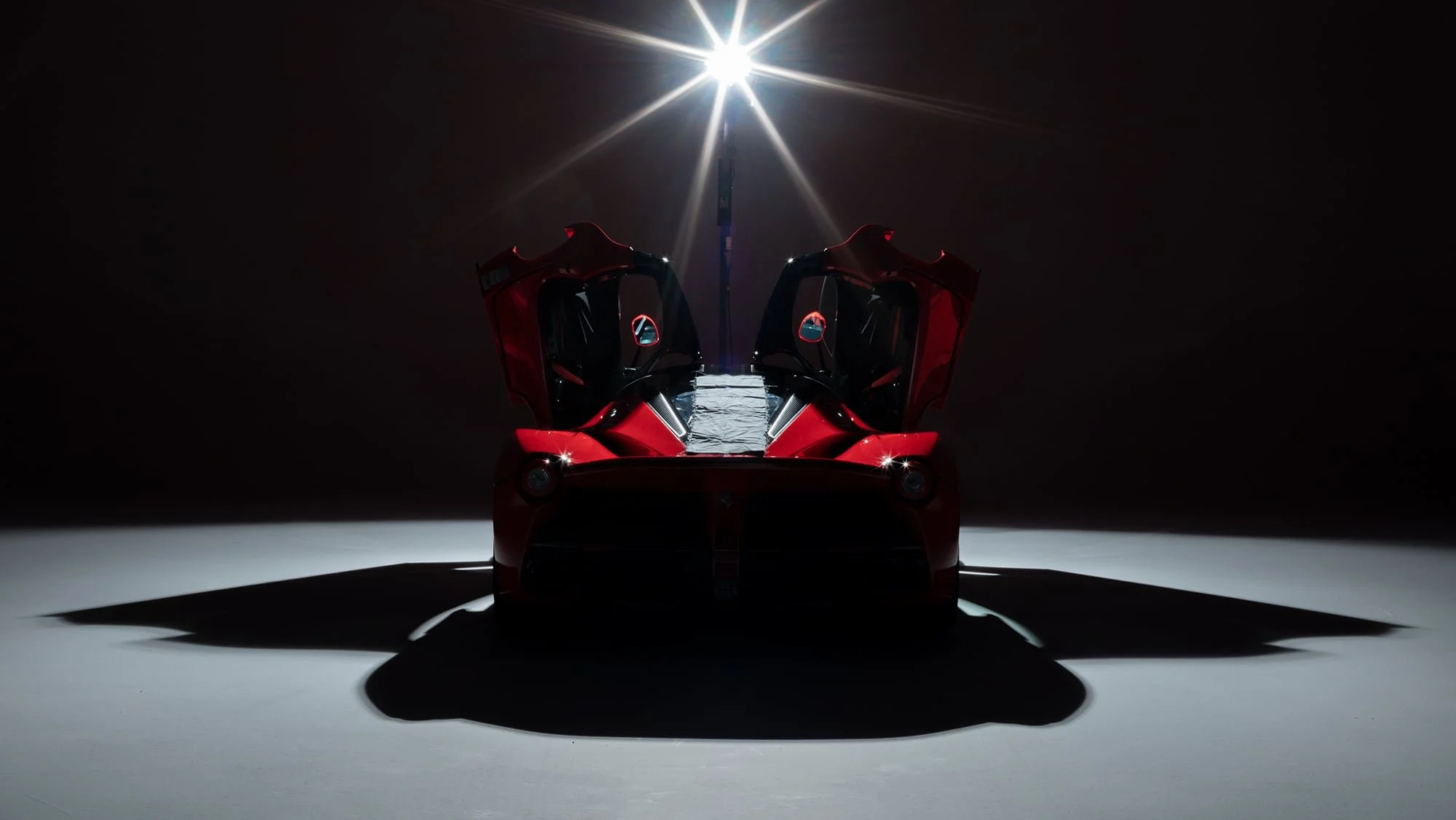
If you’ve ever seen behind the scenes of a high-end automotive studio shoot, chances are you’ve seen continuous lighting in action. This is my personal favourite, it’s the painter’s brush of photography. Unlike flash, continuous lighting lets you see exactly what’s happening as you shape the light. You’re not firing test shots to guess the result, you’re watching in real time how highlights and reflections build across the car’s surface.
The technique is a bit different: rather than pointing your lights directly at the car, you’re often bouncing light off surrounding surfaces, effectively lighting the environment around the vehicle. This reflected light wraps beautifully around contours and brings out the car’s form with precision.
In studio setups, it’s not uncommon to use eight to ten lights at varying intensities to achieve the perfect look. Most continuous systems operate around 3200K (tungsten), though LED systems offer greater flexibility. When you finally get into a studio, I’d strongly encourage you to experiment with continuous lighting. Don’t shy away from it just because it feels technical. Once you learn to control it, you’ll discover an entirely new level of precision and creativity, the ability to literally sculpt light around your subject.
The Journey Never Ends
The deeper you dive into light, whether it’s chasing the last glow of dusk on an open road or fine-tuning reflections inside a studio, the more you realise that photography isn’t about capturing what’s in front of you. It’s about creating how it feels.
In the world of automotive photography, that emotion comes from light. Learn it. Respect it. Chase it.
One day, you’ll find that your images don’t just show the car that you were shooting but they show you how it made you feel.
Dealing with the Weather
If you’re shooting cars outdoors, especially in the UK, the weather will become part of your job description.
Subscribe to a few reliable weather apps and use them daily. They can save a shoot or help you make the call to reschedule. But also, learn to shoot in whatever conditions you’re given. Bright sun, rain, overcast, they all offer something different. I have arrived at location shoots and its brilliant blazing blue skies and bright sunshine, somebody will normally say to me, “you’ve picked a great day for it mate.” where the fact is that those conditions for me are a real challenge, especially if its a light coloured car, you need to control that contrast and it can be hard. Practising to work in these types of conditions will help you feel more confident and in many cases like these I will actually start to light the care with flash heads, alwasy gets a few funny looks when its sunny, but with can overide the ambient sunlight and therefore I can work to lower that ratio and start to regain some control over highlights and shadows.
You can’t tell a brand or marketing manager, “Sorry, I’m struggling to get what you need because the light is too hard.” Learn to adapt and find ways to make the situation work.
Sometimes that means slowing your shutter to blur rain or repositioning to use reflections creatively. Whatever it takes, the client still needs results.
Make Friends, Build Relationships
Social media is a powerful tool if used well.
In the early years, post only the kind of work you want to be known for. If you want to be an automotive photographer, show automotive photography, nothing else.
Once you’ve built a following and reputation, you can show more of your personality. People like to see the human side of what you do, understand a little more about what you’re about.
Across all our platforms, we now have over thousands of followers, but that came from years of consistency, not quick tricks.
Also, use LinkedIn properly. Learn how to build a strong profile and use it to research clients, marketing directors, and agencies. It’s an invaluable tool when used well.
Back It Up, twice
Everything I shoot is backed up twice. Cameras can be replaced, data can’t. I can not think of a worse situation than having to call a client and say that all the work has been lost…
Once, I thought I’d lost one of my portable drives after a flight. For a few seconds, my heart sank, not because of the drive, but because of the data on it. Of course, it turned up in the back pocket of my flight case. But that moment stuck with me and since then I never rely on just one back up, especially while travelling.
We rely on so much technology that it’s easy to forget that it can fail, and often at the very time we expect it least.
Failure is not Fatal
When I was in my early years of shooting, I was asked by Aston Martin to shoot their new One77 prototype for social media and press.
The shoot was to take place at their design centre within the Gaydon HQ. The shoot went well and the accommodation they put me in was a very swanky Country House.
The MD at Hasselblad was aware of the shoot and called me and said, “Let’s have dinner tonight”, how could I refuse.
We were chatting away about how I was finding the Hasselblad H3, a recent purchase as I entered the medium format world for my work and also how the shoot had gone at Aston. Chris, the MD turned to me and said, “you’ve had an amazing day and yet you look a little down.” I explained that I had posted some stuff online about doing the shoot and had received a lot of hate comments and messages, generally knocking what I do and telling me that my work was not any good.
“Excellent!” announced Chris, I looked at him is in amazement and he went onto explain that he’d be worried if I didn’t get haters. “You know you’re on the right track when you are starting to get under their skin enough that they get rattled, good for you, keep on doing what you’re doing, you’re on the right track.” Ever since then I just let hate comments go over my head, I smile to myself and wish them a nice day, if I feel like stirring the pot a bit…
“Success is not final, failure is not fatal: It is the courage to continue that counts.”

Herding Ducks
NO MATTER HOW YOU FEEL, GET UP, SHOW UP, AND NEVER GIVE UP
Purpose is not proven by what you say.
It’s proven by your actions.
I was on a shoot recently and somebody said to me that moving from a military background to being a commercial photographer didn’t seem like an obvious one.
The reality is that for me my personal journey has taught me many life changing lessons that make me who I am and sculpt the way that I not only think but also how I operate within my business. 2026 will mark 20 years since I started my business and, in many ways, I owe its success not only to the amazing people and clients that I work with but also to a set of beliefs that were ingrained into me as a young man trying to find his place in this world.
Closing Thoughts
Photography isn’t about chasing perfection. It’s about showing up, learning, and adapting.
Every job teaches you something, about light, about people, about how to stay calm when things go wrong.
Being a photographer isn’t defined by the camera you use or the brands you’ve shot for. It’s defined by how you think, how you see, and how you work when no one’s watching.
If you stay curious, honest, and committed to improving, you’ll go far. Because in the end, this career isn’t about taking pictures, it’s about telling stories, helping people, and creating images that mean something.
Keep shooting. Keep learning. Keep your feet on the ground and your eyes open to the light, the rest will follow.
Most importantly, ‘Don’t shoot what it looks like, shoot how it feels.’